2026 Best Waterproof LED Screen for Outdoor Use
Choosing the right outdoor display in 2026 requires more than checking a product label. Outdoor LED displays face rain, dust, heat, wind, and direct sunlight every day. Rain is only part of the problem. Heat can weaken adhesives, while dust may enter poorly sealed cabinets. A reliable Waterproof Led Screen must manage these conditions without sacrificing brightness, color accuracy, or serviceability.
This guide examines practical factors used by experienced installers and commercial display buyers. It considers IP ratings, cabinet construction, drainage design, operating temperature, pixel protection, and front or rear maintenance access. An IP65 rating may suit many exposed surfaces, but site conditions still matter. Coastal air, freezing weather, and long daily operating hours can change the decision. Brightness also needs careful testing. Excessive output wastes energy, while insufficient brightness produces a dull image at noon.
Real projects often reveal details that brochures overlook. Check cable seals, module gaps, ventilation paths, and the quality of the power supply. Ask for test reports, warranty terms, and clear after-sales procedures. Independent certification is more valuable than vague claims. No screen is maintenance-free. That is worth remembering.
The best choice balances weather resistance, visual performance, energy use, installation limits, and long-term repair costs. Some models look impressive in a showroom but struggle under constant sunlight. Others perform well yet offer difficult maintenance access. This comparison aims to separate durable engineering from attractive marketing, while acknowledging that no single screen fits every outdoor location.
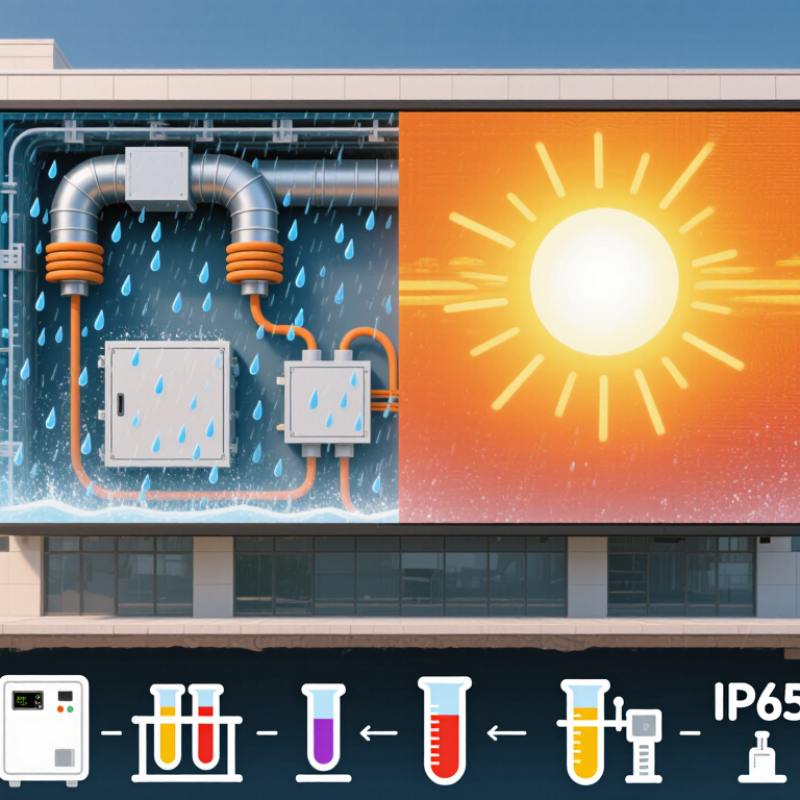
What Makes an Outdoor LED Screen Waterproof in 2026
What Makes an Outdoor LED Screen Waterproof in 2026
A waterproof outdoor LED screen needs more than a sealed front panel. Its enclosure, modules, cables, power units, and cabinet joints must resist rain as one system. Look for a verified IP rating, such as IP65 or higher, supported by independent testing. The first number protects against dust. The second measures water resistance. A label alone is not enough.
Good designs use silicone gaskets, sealed connectors, drainage paths, and corrosion-resistant cabinet materials. These details matter during heavy rain, when water can collect around screws or cable openings. Protective coatings on circuit boards add another layer of defense. However, coatings cannot repair poor assembly. I have seen moisture enter through a small gap beneath an incorrectly fitted cable gland.
Thermal control also affects waterproof performance. Outdoor screens heat up under direct sunlight, then cool quickly after rainfall. This repeated expansion and contraction can weaken seals. Reliable systems use ventilation methods that limit moisture entry while releasing internal heat. They should also pass spray, immersion, salt mist, and temperature-cycle tests. Real installation conditions remain unpredictable.
Maintenance still matters. Dust, loose fasteners, and aging gaskets can reduce protection over time. Inspect drainage holes and connectors before the wet season. A stronger rating is not always the best choice if servicing becomes difficult. Waterproofing is a complete design process, not a marketing phrase.
2026 Best Waterproof LED Screen for Outdoor Use
What Makes an Outdoor LED Screen Waterproof?
The chart shows the standardized water-exposure duration used in IEC 60529 ingress-protection testing. For outdoor LED displays, an IP65 enclosure is commonly preferred because it combines dust-tight protection with resistance to water jets. IPX7 and IPX8 represent temporary or continuous immersion tests and should not be interpreted as a replacement for a complete outdoor installation design.
Key Specifications for Choosing a Waterproof LED Screen
For the 2026 best waterproof LED screen for outdoor use, specifications matter more than headline brightness.
Start with ingress protection. An IP65 rating blocks dust and protects against water jets, according to IEC 60529. It does not permit immersion. IP66 offers stronger water-jet resistance, but installation quality still decides long-term reliability. Drainage, sealed connectors, and raised mounting frames prevent water from pooling behind the cabinet.
Brightness should match the site, not simply reach the highest number. Outdoor screens commonly need about 5,000–10,000 nits in direct sunlight. A 2024 outdoor digital signage report by Grand View Research identifies sunlight readability as a major purchasing factor. High brightness without an ambient-light sensor can waste energy and shorten LED life. The U.S. Department of Energy’s 2023 Solid-State Lighting R&D Opportunities report lists 200 lumens per watt as a future package-efficiency benchmark, but a complete display usually performs lower. That distinction is easy to miss.
Choose a pixel pitch based on viewing distance. A 4–6 millimeter pitch suits many roadside or event applications, while closer audiences need finer pixels. Refresh rates above 3,840 hertz reduce camera scan lines during live filming. Look for operating ranges near -20°C to 50°C, corrosion-resistant cabinets, and surge protection. Test the screen after heavy rain and midday heat. It may still fail. Specifications are promises; maintenance records reveal the truth.
Top Waterproof LED Screen Types for Outdoor Applications
2026 Best Waterproof LED Screen for Outdoor Use
Top Waterproof LED Screen Types for Outdoor Applications
Outdoor LED screens differ by structure, protection level, and installation purpose. Fixed outdoor LED walls suit stadiums, roadside advertising, and building facades. Their sealed cabinets handle rain, dust, and repeated temperature changes. Look for at least IP65 protection on the front and IP54 on the rear. An IP67 rating offers stronger resistance, but it does not remove the need for drainage.
Rental LED screens work better for concerts, festivals, and temporary events. Lightweight cabinets reduce setup time, while reinforced corners protect modules during transport. Transparent LED screens fit glass buildings and retail windows. They preserve daylight and visibility, although their contrast can weaken under direct sunlight. High-brightness SMD screens remain practical for open spaces. DIP designs may deliver stronger outdoor visibility, but they often require more installation space.
Check brightness above 5,000 nits for sunny locations, then confirm automatic brightness control. Excessive brightness can waste energy and shorten component life. I have seen screens fail because installers sealed cable entries poorly. Small gaps matter. Use corrosion-resistant connectors, raised cabinets, and accessible drainage paths. A weather test should include wind, driving rain, and heat exposure. Do not trust the rating alone. Measure twice. Test at night, too. Some screens look excellent in daylight but appear harsh after dark. A service plan should include spare modules, fan checks, and periodic inspection of seals. No specification replaces a site test.
2026 Best Waterproof LED Screen for Outdoor Use - Top Waterproof LED Screen Types for Outdoor Applications
| Waterproof LED Screen Type | Best Outdoor Application | Typical Pixel Pitch | Typical Brightness | Weather Protection | Typical Viewing Distance | Typical Refresh Rate | Main Advantage |
| Outdoor SMD LED Screen | Billboards, building facades, retail advertising, roadside displays | 3.9–10 mm | 4,500–7,000 nits | IP65 front / IP65 rear | 4–10 m and beyond | ≥1,920 Hz | Balanced image quality, brightness, viewing angle, and cost |
| Outdoor DIP LED Screen | Large roadside billboards, stadium perimeters, high-temperature locations | 6–20 mm | 6,000–10,000 nits | IP65 front / IP65 rear | 6–20 m and beyond | ≥1,920 Hz | High brightness, strong impact resistance, and long outdoor service capability |
| Outdoor Fine-Pitch SMD LED Screen | Outdoor retail windows, covered plazas, corporate campuses, close-view installations | 1.5–3.9 mm | 3,500–6,000 nits | IP65 front / IP54–IP65 rear | 1.5–5 m | ≥3,840 Hz | Sharper text and detailed images at relatively short viewing distances |
| Outdoor Rental LED Screen | Concerts, festivals, sports events, temporary stages, touring productions | 2.6–6.9 mm | 4,000–6,500 nits | IP65 front / IP54–IP65 rear | 3–12 m | ≥3,840 Hz | Lightweight cabinets, quick installation, stacking, and frequent transport |
| Outdoor Stadium Perimeter LED Screen | Sports arenas, running tracks, scoreboards, sponsor advertising | 6.6–10 mm | 5,000–8,000 nits | IP65 front / IP65 rear | 6–20 m | ≥3,840 Hz | Wide viewing angles, high impact resistance, and camera-friendly performance |
| Outdoor Transparent LED Screen | Glass facades, shopping malls, airports, architectural media displays | 6–20 mm | 4,000–7,000 nits | Typically IP45–IP65, depending on enclosure design | 6–20 m and beyond | ≥1,920 Hz | Maintains daylight visibility and allows airflow and partial transparency |
| Outdoor Mobile LED Screen | Truck-mounted advertising, public announcements, outdoor campaigns, emergency messaging | 3.9–10 mm | 4,500–7,000 nits | IP65 front / IP65 rear | 4–15 m | ≥1,920 Hz | Flexible deployment without requiring a permanent mounting structure |
| Outdoor Curved or Flexible LED Screen | Columns, rounded building features, creative stage designs, curved billboards | 2.9–10 mm | 4,000–7,000 nits | IP65 front / IP54–IP65 rear | 3–15 m | ≥1,920 Hz | Adapts to curved surfaces and supports non-standard creative installations |
How to Select the Best Waterproof LED Screen for Your Needs
Selecting the best waterproof LED screen starts with the installation environment, not the display size. Measure rainfall, sunlight, viewing distance, wind exposure, and available power. Coastal locations also need protection from salt air and condensation. Look for an IP65 rating or higher, and confirm whether it covers the front, rear, and cable connections. Ask for test documents based on IEC 60529. A waterproof claim alone is not enough.
Brightness should match the site. A screen facing direct midday sunlight may need 5,000 to 7,000 nits, while a shaded area can use less. Excessive brightness may waste energy and annoy nearby viewers. Choose pixel pitch according to viewing distance. Smaller pixels suit close audiences, but they usually increase cost. Check refresh rate if cameras will record the screen. Low refresh performance can create visible lines.
The cabinet should include drainage paths, sealed cable entries, corrosion-resistant materials, and tested wind-load performance. Confirm its operating temperature range, ventilation method, and maintenance access. Technicians should be able to replace a module without removing the entire structure. Request warranty terms, spare-part availability, and installation guidance in writing. Field conditions are often harsher than laboratory tests. I have seen impressive specifications fail because water collected behind poorly routed cables. Request a sample cabinet, inspect every seam, and ask how the screen performs after repeated rain exposure.