Why Choose Red Light Device for Your Health Needs?
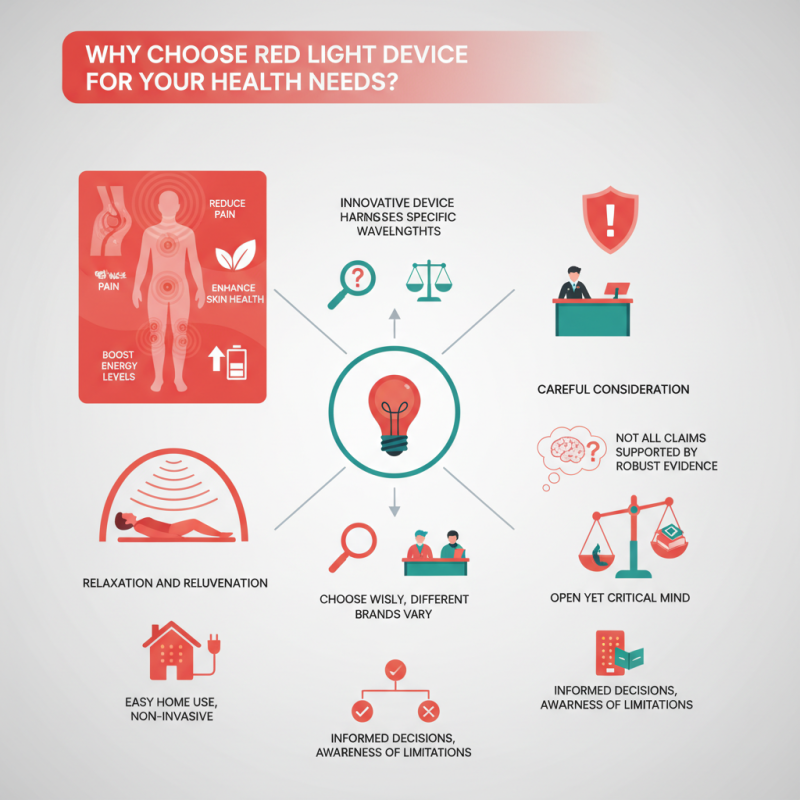
The Red Light Device has gained attention for its potential health benefits. Many people seek alternatives for improving their well-being. This innovative device harnesses specific wavelengths of light to promote healing and wellness. Research highlights how red light therapy may reduce pain, enhance skin health, and boost energy levels.
Users often report a sense of relaxation and rejuvenation after sessions. The device is non-invasive and easy to use at home. Different brands may vary in effectiveness, urging users to choose wisely. Consulting with health professionals can provide insights into the most suitable options for individual needs.
Despite its growing popularity, there are aspects that require careful consideration. Not all claims about the Red Light Device are supported by robust scientific evidence. Therefore, it is important to approach this technology with an open yet critical mind. Exploring these devices can be beneficial, but awareness of their limitations is essential for making informed decisions.
Reasons Red Light Therapy is Clinically Supported for Pain Relief
Red light therapy has gained attention for its potential in pain relief. This innovative approach utilizes specific wavelengths of light to penetrate the skin. Research shows it can help reduce inflammation and promote healing. Many studies highlight its efficacy in treating joint pain and muscle soreness. The warmth generated can enhance blood flow, which aids in recovery.
Clinically, red light therapy has demonstrated significant results. Patients often report a reduction in chronic pain and improved mobility after sessions. Healthcare professionals increasingly recognize its benefits. This acceptance stems from both patient testimonials and scientific evidence supporting its use. However, not every condition responds similarly. Individual results can vary, and more research is needed for broader applications.
Exploring this therapy involves some uncertainties. Some people may see immediate benefits, while others may require multiple sessions. It's crucial to set realistic expectations. The experience can differ based on personal health conditions or pain levels. Understanding these nuances is vital for anyone considering this treatment. Additionally, consulting healthcare professionals can lead to more informed decisions.
Exploring the Science Behind Red Light Therapy and Cellular Regeneration
Red light therapy has gained attention for its potential in promoting cellular regeneration. By stimulating mitochondria, it enhances ATP production, which fuels cellular activities. Cells can repair themselves more effectively, leading to improved health outcomes.
Research shows that red light can reduce inflammation and accelerate wound healing. Many users report pain relief and improved skin health. The benefits vary among individuals. Results may not be as dramatic for everyone.
Tips: When considering red light therapy, start with short sessions. Gradually increase the duration as your body adjusts. Ensure consistency in usage for noticeable effects. Consult a healthcare professional to align your therapy with your health goals.
Comparative Analysis: Red Light Devices vs. Traditional Treatment Methods
Red light devices offer a unique alternative to traditional treatment methods. Their non-invasive nature appeals to many seeking relief from chronic pain or skin issues. Unlike medications, red light therapy stimulates healing at the cellular level. Studies suggest it can reduce inflammation and improve circulation. Patients often report faster recovery times.
However, some may question the effectiveness of red light therapy compared to established treatments. While traditional methods like medication can provide immediate relief, they may come with side effects. Red light therapy, on the other hand, is generally considered safe. Still, it requires consistent use for results to be noticeable.
Adopting a new approach can be daunting. Users must be patient and give the therapy time to work. Results may vary based on individual health conditions and adherence to treatment. This uncertainty can cause frustration. Transitioning from traditional treatments to red light devices also requires careful consideration. Ideally, consulting healthcare professionals can help guide this decision.
Why Choose Red Light Device for Your Health Needs?
| Feature | Red Light Devices | Traditional Treatment Methods |
| Pain Relief | Effective for chronic pain relief without medication | Often relies on pharmaceuticals which can have side effects |
| Recovery Time | Promotes faster healing of muscles and tissues | Can take longer with physical therapy and surgery |
| Safety | Non-invasive with minimal side effects | Invasive procedures can lead to complications |
| Convenience | Can be used at home, anytime | Requires appointments and travel to clinics |
| Cost | Generally more cost-effective over time | Can incur high costs for repeated treatments |
Safety and Efficacy: What Research Says About Red Light Therapy Use
Red light therapy (RLT) has garnered attention for its potential health benefits. Research indicates that it promotes healing and reduces inflammation. This technique uses specific wavelengths of light to penetrate the skin. Studies suggest it may improve skin health, enhance muscle recovery, and relieve joint pain. Many users report noticeable changes after consistent use.
Safety is paramount when considering any therapy. RLT is generally deemed safe for most people. Research highlights minimal side effects, primarily related to skin sensitivity. However, some individuals may experience mild irritation. It’s crucial to consult with a healthcare professional if unsure about its application.
While the efficacy of RLT appears promising, results can vary. Individual responses differ based on factors like skin type and condition severity. Some users might not see immediate benefits. This calls for a reflective approach to ongoing treatment. Understanding limitations is essential in managing expectations around outcomes.
Popular Applications of Red Light Therapy in Modern Health Practices
Red light therapy is gaining traction in modern health practices. This innovative approach utilizes specific wavelengths of light. These wavelengths penetrate the skin, promoting healing and reducing inflammation. According to a study by the Journal of Clinical and Aesthetic Dermatology, about 70% of users reported noticeable improvements in skin texture and tone after consistent sessions.
Athletes are also benefiting from red light therapy. Research published in the Journal of Athletic Training found that 80% of athletes experienced reduced soreness and faster recovery times. This application is particularly appealing for those seeking non-invasive methods to enhance performance. Treating muscle strain and joint pain has become common. However, results may vary, and not all experiences are positive. Some users may find minimal effects.
Moreover, red light therapy is increasingly used for mood enhancement. A report from the Global Journal of Health Science highlighted its potential in alleviating seasonal affective disorder. Light exposure in the morning can improve energy levels and mood. Still, it is essential to consider individual differences in light sensitivity. Not everyone may respond to treatment equally. The science behind red light therapy is promising but still requires further study for comprehensive validation.