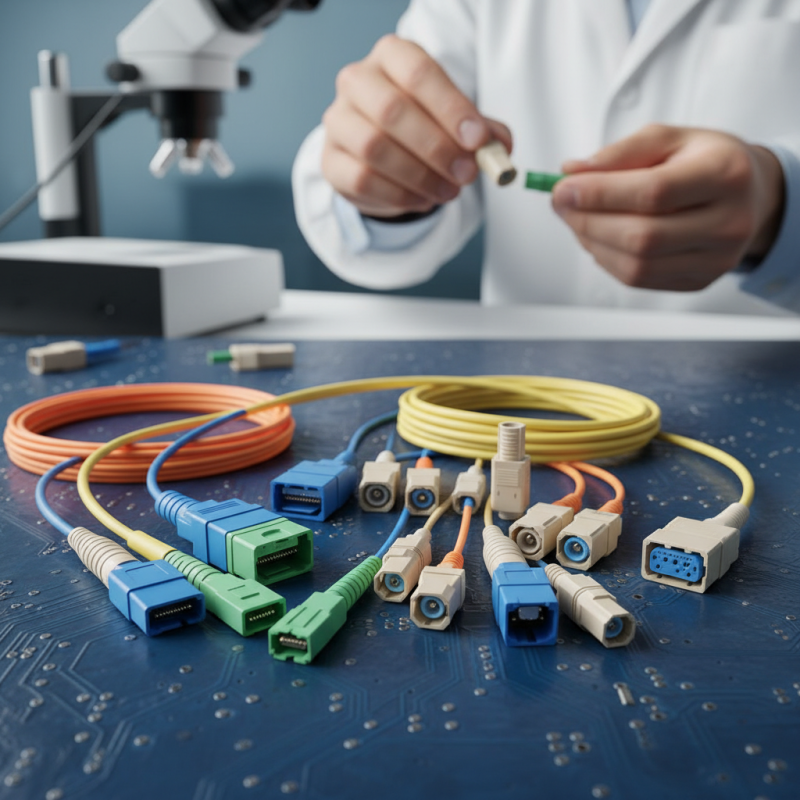
How to Choose the Right Fiber Optic Connectors for Your Needs?
Choosing the right Fiber Optic Connectors is crucial for optimal network performance. Industry expert Dr. Emily Shaw states, "The right connector can make or break your connection." This highlights the importance of understanding specific needs in the fiber optics field.
Fiber Optic Connectors come in various types, each serving unique purposes. For instance, SC, LC, and ST connectors have different applications and performance levels. Choosing the wrong type can lead to inefficient data transmission. Observing trends and technological advancements can help guide your decision.
While it may seem straightforward, selecting connectors involves thoughtful consideration. Compatibility with existing systems is essential. Ensuring durability and reliability in various environments can be daunting. Missteps in this process often lead to wasted resources and potential outages.
Understanding the Different Types of Fiber Optic Connectors Available
Fiber optic connectors are essential components in modern communication systems. They play a crucial role in ensuring the efficient transfer of data through optical fibers. Understanding the various types of fiber optic connectors can help you choose the right one for your needs.
Common types include SC, LC, ST, and MTP/MPO connectors. SC connectors are known for their durability and ease of use. They have a push-pull design that allows for quick connections. LC connectors are compact and ideal for high-density applications.
Meanwhile, ST connectors feature a bayonet-style coupling, making them reliable for outdoor use. MTP/MPO connectors are excellent for applications requiring multiple fibers in a single connection.
Choosing the wrong connector can lead to problems. For instance, poor alignment may cause signal loss. Mismanaged cabling might result in inefficient data transfer. This could lead to frustration, especially in a business environment.
Therefore, take time to analyze your requirements. Consider factors like the environment and bandwidth needs. Making an informed choice now can save trouble later.
Evaluating Compatibility: Matching Connectors with Your Fiber Cable
When selecting fiber optic connectors, compatibility is crucial. The connector type must match the specific fiber cable used. This includes considering the core size, which can vary between single-mode and multi-mode fibers. Ensuring a proper match prevents signal loss and maintains system performance.
Different connectors have unique designs and applications. For instance, some connectors are easier to install, while others offer better durability. If you choose the wrong type, it can lead to connection issues. This could impact data transmission quality. Review the specifications of both the cable and connector carefully. It’s important to ensure they align with each other.
Sometimes, people overlook the importance of this compatibility. Missteps can lead to costly delays and repairs. A good practice is to seek advice if unsure. Engaging with professionals can provide valuable insights. It’s better to ask questions early than regret a poor choice later. Taking the time to verify compatibility helps in creating a robust fiber optic network.
Assessing Performance: Factors Influencing Connector Efficiency
When selecting fiber optic connectors, performance is key. Several factors influence connector efficiency, impacting network reliability. According to a 2022 industry report, nearly 70% of connections fail due to poor connector quality or installation errors. This highlights the need for thorough assessment during selection.
One critical factor is the connector type itself. Various designs have unique specifications. For instance, SC and LC connectors are popular for their compact size and ease of use. However, these connectors can also experience significant losses if not handled carefully. Environmental conditions play a notable role too. Extreme temperatures and humidity levels can degrade performance, affecting signal integrity.
Moreover, the polishing method of a connector impacts its efficiency. APC connectors are known for reduced back reflection, which is crucial for long-distance connections. However, the precision required for manufacturing is often overlooked. A slight imperfection can lead to a 1 dB increase in loss, significantly affecting overall performance. Ensuring proper compatibility with existing systems is necessary, yet many overlook this detail, leading to inefficiencies.
Choosing the Right Connector for Specific Applications and Environments
When selecting fiber optic connectors, understanding the specific application and environment is vital. For indoor installations, lightweight connectors are suitable. Types like SC and LC connectors are often favored due to their compact design. In contrast, outdoor environments demand tougher materials. These connectors must withstand humidity, temperature fluctuations, and physical stresses. According to a recent industry report, about 30% of fiber optic failures stem from improper connector choices tailored to environmental conditions.
Furthermore, the choice of connector can influence overall system performance. For instance, multimode fibers often utilize MTP/MPO connectors for high-density environments. Such connectors allow for quick connections and disconnections. However, they may not suit every application, especially where precision is key. The same report indicates that systems using inappropriate connector types faced declines in data rates by up to 25%. This showcases the importance of matching connectors to operational needs and conditions.
In recognizing these nuances, installers can make informed choices. Whether prioritizing longevity in harsh settings or optimizing for high-speed data transfer, attention to detail is crucial. Reflecting on past projects can offer valuable insights. There’s often room for improvement in connector selection processes.
Fiber Optic Connector Selection Based on Application
This bar chart illustrates the percentage of use cases for various fiber optic connectors. Single Mode and Multi Mode connectors are the most widely used, catering to different networking demands. Understanding the application requirements helps in selecting the appropriate connector type for optimal performance.
Budget Considerations: Balancing Cost and Quality in Connector Selection
When selecting fiber optic connectors, budget considerations play a crucial role. The cost-quality balance directly influences project outcomes. For instance, a report from the Fiber Optic Association indicates that low-quality connectors can lead to a 30% increase in installation costs due to higher failure rates. These failures often result in downtime, which can be far more expensive than initial savings.
Choosing a cheaper option may seem attractive, but hidden costs can arise. This includes the need for more frequent replacements and potential damage to related infrastructure. A study revealed that mid-range connectors, while slightly more expensive upfront, show a 40% lower failure rate over five years. This data encourages a thorough examination of total costs rather than just initial pricing.
Additionally, consider the environment where these connectors will be used. Industrial settings may require more rugged options, while residential systems might need less durable connectors. Some budget-friendly solutions lack the necessary durability, requiring replacements sooner than expected. Therefore, the right choice must focus on long-term performance instead of short-term savings.