How to Choose Rimless Eyeglass Frames?
Choosing Rimless Eyeglass Frames can transform your appearance without making your glasses the main attraction. Their nearly invisible design creates a clean, lightweight look. However, minimal style does not guarantee perfect comfort. A frame may appear elegant online but feel unstable after several hours of wear.
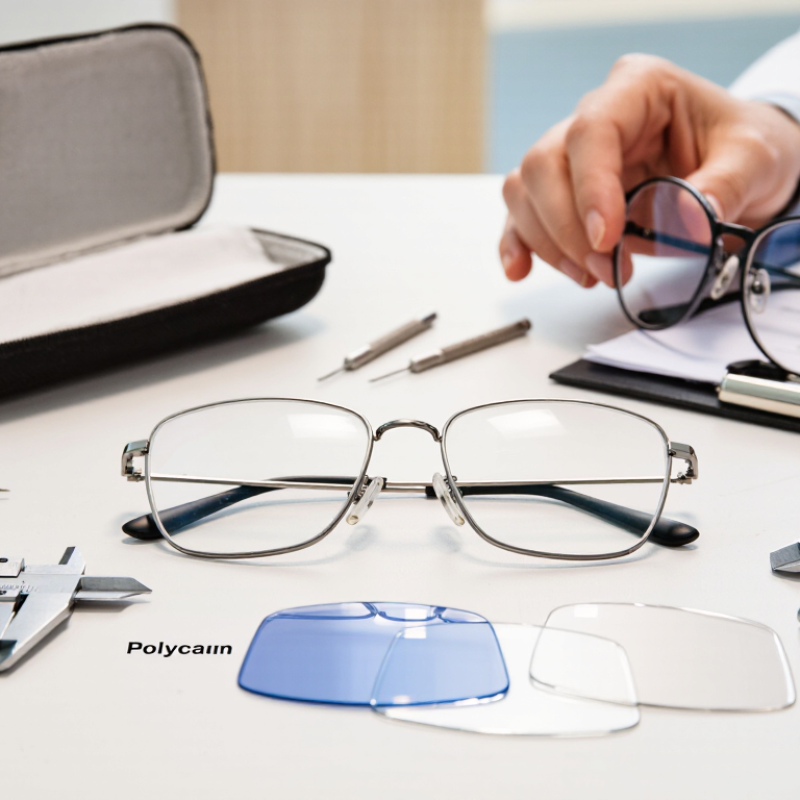
The right choice begins with fit, lens needs, and daily habits. Measure your pupillary distance accurately, and compare it with the frame’s bridge and temple measurements. An experienced optician can check alignment, lens thickness, and pressure around your ears. These details matter. Rimless lenses also need suitable materials and careful mounting, especially for active lifestyles. Polycarbonate or Trivex lenses may offer practical impact resistance, while high-index lenses can reduce thickness for stronger prescriptions. Your eye-care professional should confirm the best option for your prescription.
Consider the small moments. Do the temples slide when you look down? Do the nose pads leave marks after a commute? Does the frame catch on your hair? These observations reveal more than a product photograph. Rimless Eyeglass Frames may suit a refined wardrobe, but they can demand gentler handling than full-rim designs. That trade-off is easy to overlook. A slightly imperfect fit may seem acceptable in a shop, yet become irritating during a long workday. Trust qualified advice, use a reliable retailer, and allow time for professional adjustment. The best frame is not merely subtle. It should remain comfortable, secure, and appropriate for the way you actually live.
Define Rimless Frames Through ISO 12870 Standards and Key Components
How to Choose Rimless Eyeglass Frames?
Rimless frames hold lenses with drilled holes, screws, bridge parts, and temple mounts. ISO 12870:2016 defines requirements and test methods for spectacle frames, including construction, dimensions, durability, and physiological compatibility. It does not approve a particular style. It tests whether the assembled frame can perform safely under controlled conditions.
Look closely at the lens holes. They should appear clean, centered, and free from chips. The screws must sit securely, not tilt inside the lens. A qualified optician should check drilling positions, lens thickness, and edge strength before fitting. Small errors become visible quickly. They can also affect alignment.
The World Health Organization’s World Report on Vision estimates that at least 2.2 billion people have near or distance vision impairment. Correct lenses therefore need more than a delicate appearance. Ask whether the frame has passed relevant ISO 12870 testing, and request maintenance guidance for screws and nose pads. In daily use, rimless frames may feel exceptionally light, but they can show stress sooner than thicker designs. That is an honest trade-off. A frame may meet the standard and still feel unsuitable on one face. Try it with natural head movement, not only in a mirror.
How to Choose Rimless Eyeglass Frames?
Define Rimless Frames Through ISO 12870 Standards and Key Components
| Category | Key Component or Criterion | Purpose in a Rimless Frame | Practical Selection Guidance | Relationship to ISO 12870 |
|---|---|---|---|---|
| Frame definition | Rimless construction | The lenses form the visible outline, while the bridge, temples, and mounting hardware hold the spectacles together. | Choose this style for a lightweight, low-visual-impact appearance, provided the lenses and mounting system suit the wearer. | ISO 12870 covers spectacle frames, including structural and performance requirements applicable to rimless constructions. |
| Standard reference | ISO 12870:2016 | Provides requirements and test methods for spectacle frames used with ophthalmic lenses. | Ask for documented conformity or test information when durability and compliance are important. | The standard addresses general construction, dimensions, mechanical strength, durability, and frame performance; it is not a personal fitting prescription. |
| Lens mounting | Drilled or grooved lens attachment | Connects the bridge and temples directly to holes, slots, or other prepared features in the lenses. | Select a system with accurately aligned holes, smooth hardware, and adequate lens material around each attachment point. | The finished frame should remain secure and functional during the applicable frame performance tests. |
| Bridge | Nose bridge and bridge mounts | Connects the two lenses and transfers load across the nose area. | Check that the bridge sits evenly, does not pinch, and keeps the pupils centered behind the lenses. | Bridge construction and attachment must withstand relevant deformation and durability evaluations under ISO 12870. |
| Nose support | Nose pads, pad arms, and pad screws | Distributes weight and controls frame height, stability, and comfort. | Prefer adjustable pads for changing nose shapes; inspect pad-arm alignment and ensure screws are not loose or sharp. | Small components and projections should not compromise the frame's safety, function, or durability. |
| Temple connection | End pieces, temple blocks, and attachment screws | Transfers the temple load to the lens and keeps the side of the frame aligned. | Check that the connection is centered, does not twist the lens, and allows normal opening and closing. | Temple and end-piece connections are included in mechanical strength and durability considerations. |
| Temples | Temple arms and temple tips | Maintain lateral stability and distribute pressure around the ears. | Common adult temple lengths are approximately 125–150 mm, but actual fit depends on head size and ear position. | The standard evaluates frame function and resistance to relevant mechanical stresses, not a single universal temple length. |
| Hardware | Screws, nuts, washers, bushings, and spacers | Secure the lenses and reduce stress concentration at drilled mounting points. | Look for smooth, corrosion-resistant hardware and compression parts that prevent direct metal-to-lens damage. | Hardware must remain secure and functional after applicable strength, durability, and environmental tests. |
| Lens material | Impact-resistant ophthalmic lens material | The lens itself carries the outline and receives the stresses from the rimless attachments. | Confirm that the selected lens material and thickness are suitable for drilling and for the wearer's prescription. | ISO 12870 applies to frames; lens safety and optical requirements may be covered by separate ophthalmic-lens standards. |
| Lens edge condition | Smooth, accurately finished lens edges | Reduces stress concentration, skin contact hazards, and the likelihood of chipping near the mounting holes. | Reject lenses with chips, sharp edges, cracks, or poorly polished holes. | Frame safety and workmanship should prevent hazardous projections and preserve normal use after testing. |
| Fit dimensions | Lens width, bridge distance, and temple length | Determine how the spectacles align with the eyes, nose, ears, and face. | Typical adult lens widths are about 40–60 mm and bridge distances about 14–24 mm; use measured facial fit rather than these ranges alone. | ISO 12870 includes dimensional and marking considerations, but it does not replace professional fitting measurements. |
| Mechanical durability | Opening, closing, bending, and deformation resistance | Shows whether the frame can tolerate routine handling without permanent loss of function. | Prefer frames with stable alignment, secure connections, and no looseness after repeated handling. | Mechanical strength and durability are central performance areas in ISO 12870 testing. |
| Corrosion and perspiration resistance | Metal parts exposed to skin, moisture, and perspiration | Helps preserve appearance, structural integrity, and comfort during normal wear. | Choose well-finished components and clean the frame regularly, especially after sports or heavy perspiration. | Resistance to perspiration and relevant environmental effects is addressed by the standard's performance requirements. |
| Surface and safety | Finish, edges, projections, and contact surfaces | Protects the wearer from irritation, sharp points, and avoidable discomfort. | Inspect all lens mounts, pad arms, screw ends, temple tips, and polished edges before purchase. | ISO 12870 includes requirements intended to limit unsafe construction and unacceptable workmanship. |
| Maintenance | Adjustment and replacement availability | Allows worn pads, screws, washers, or bushings to be serviced without replacing the entire frame. | Prefer standard serviceable hardware and have a qualified optical professional perform adjustments. | ISO 12870 defines performance expectations; routine servicing and personal adjustments remain practical aftercare considerations. |
| Important: The numerical fit ranges in this table are typical adult fitting references, not universal ISO 12870 limits. ISO 12870 conformity should be verified from the applicable test documentation, while prescription, lens-material, and individual fitting decisions should be confirmed by a qualified optical professional. | ||||